Electrochemist · Surface Scientist · Materials Scientist

Pouya Hosseini

Research ScientistMax Planck Institute for Sustainable Materials · Düsseldorf, Germany

My research focuses on X-ray photoelectron spectroscopy (XPS), electrochemical interfaces, electrocatalysis and functional materials. Independently, I develop music-theory applications and perform Persian music.

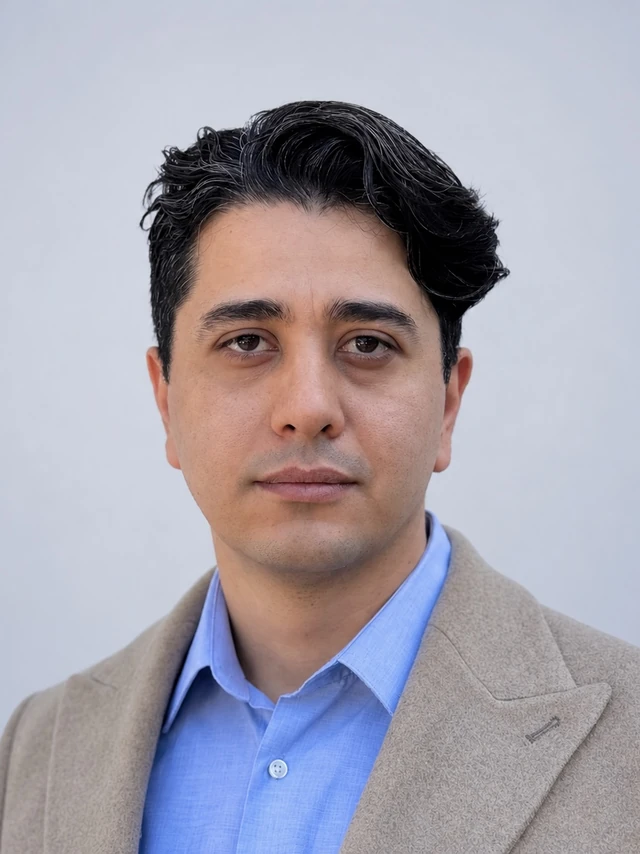
Professional headshot of Pouya Hosseini

Explore my work

Science, software and music

One personal portfolio, with distinct spaces for academic research and independent creative work.

Research

Electrochemical interfaces and functional materials

My research connects electrochemistry, surface science and materials chemistry to understand how composition, structure and interfacial transformations govern activity, selectivity and stability.

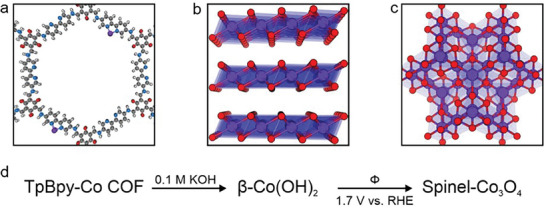
Structural models of framework-bound cobalt, cobalt hydroxide and spinel cobalt oxide.
Cobalt hydroxide particles formed in alkaline solution. After oxygen evolution, microscopy identified spinel cobalt oxide. Figure 5 · Hosseini et al., Advanced Science · CC BY 4.0
Electrocatalysis I study individual nanoparticles and catalyst ensembles to understand how structure affects electrochemical reactivity. Related publicationsClose publications
Operando spectroscopy I use infrared methods such as ATR-SEIRAS and PM-IRRAS to probe species and processes at electrode surfaces during reactions. Related publicationsClose publications
Research spotlight

Advanced Science

Shedding Light on the Active Species in a Cobalt-Based Covalent Organic Framework for the Electrochemical Oxygen Evolution Reaction

P. Hosseini, A. Rodríguez-Camargo, Y. Jiang, S. Zhang, C. Scheu, L. Yao, B. V. Lotsch, K. Tschulik

Our cobalt framework kept producing oxygen even as its structure changed. The study identified cobalt hydroxide formation in alkaline solution and spinel cobalt oxide after oxygen evolution. The porous framework helped keep those particles apart.

Read the Bochum research story

Surface characterization My hands-on XPS experience since 2016 spans instrumentation, advanced spectral interpretation, reproducible analysis and researcher training. Related publicationsClose publications

Electrochemical interfaces

Solid–liquid interfaces, reaction mechanisms, charge transfer and electrode stability.

Functional and energy materials

Nanostructured electrodes, battery interfaces, electroactive thin films and coordination compounds.

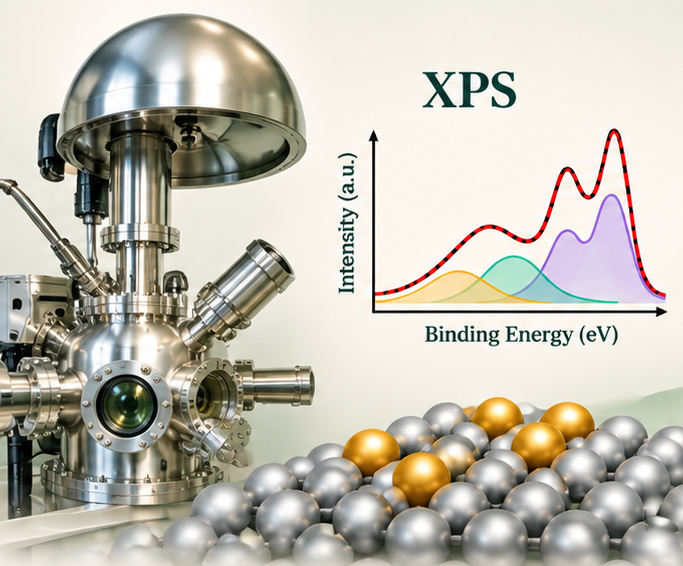
Conceptual illustration of an XPS vacuum instrument, a schematic spectrum with colored components, and a model atomic surface.
Conceptual illustration · not experimental data

Core scientific expertise

XPS & Surface Analysis

Instrumentation · Spectral Evaluation · Chemical-State Analysis

With hands-on experience in X-ray photoelectron spectroscopy (XPS) since 2016, my expertise encompasses instrument operation, advanced spectral evaluation and quantitative surface characterization. I focus on rigorous experimental acquisition, chemical-state interpretation and reproducible analysis of functional materials and electrochemical interfaces.

InstrumentationOperation, acquisition and maintenance
Spectral evaluationComplex spectra, chemical states and quantification
Surface chemistryElectrocatalysts, thin films and interfaces
View related publicationsClose related publications

Research profile

Independent development

Research-inspired music applications

Created and developed by Pouya Hosseini. These independent projects explore musical intervals, modal structures, tuning and historical theory.

World Music Scales Atlas

393 regional tuning models · 65 geographical entries · 7 Western diatonic modes

Explore musical tuning traditions on an interactive globe, transpose by 50 cents, listen to pitches and compare octave-based models on concentric interval rings or measured open spans on a shared cent axis. Source references and evidence-review notes distinguish theoretical representations from measured pitch profiles.

Urmawī Advar Atlas

Explore musical cycles, interval relationships and the historical theory of Ṣafī al-Dīn al-Urmawī.

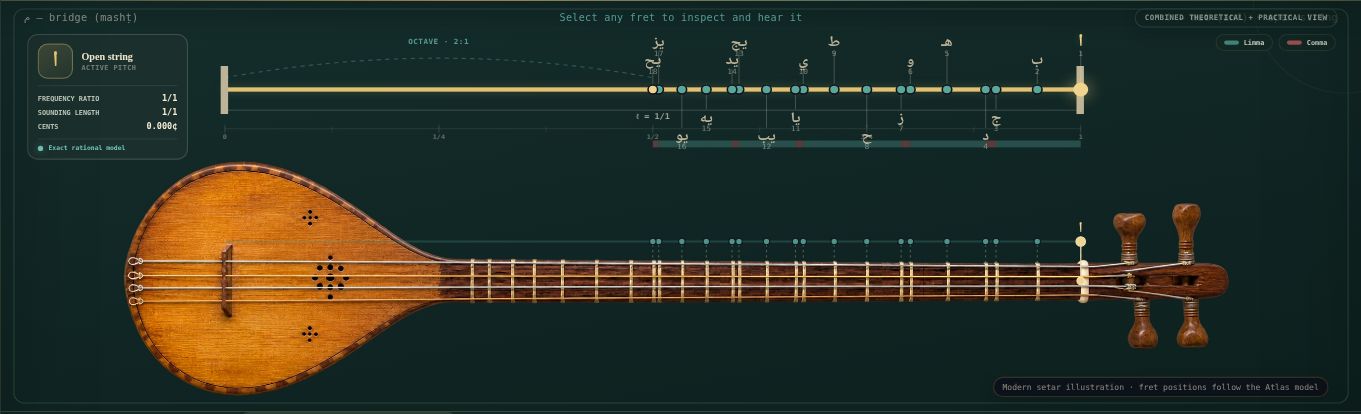
A four-string setar aligned with the Atlas fret diagram. The open string has a frequency ratio of 1/1 and a normalized sounding length of 1/1.
Earlier combined-view screenshot: Al-Urmawī’s fret divisions mapped onto a modern setar. The ruler shows the fraction of the string that sounds at each position.

All independent projects

Persian music

I share performances and improvisations on setar and santur, including original compositions and interpretations.

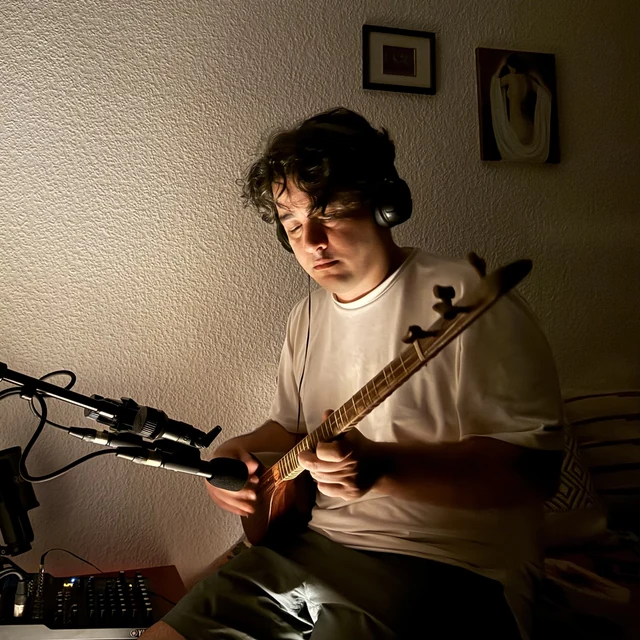
Pouya Hosseini playing setar

Music and recordings

Pouya in sunlight

About & contact

Pouya Hosseini

I am an electrochemist and materials scientist specializing in X-ray photoelectron spectroscopy (XPS), electrochemical interfaces, electrocatalysis and surface-sensitive characterization of functional materials. I am a Research Scientist at the Max Planck Institute for Sustainable Materials in Düsseldorf. Independently, I develop interactive music-theory applications and compose and perform Persian music on setar and santur. My independent applications are the Persian Music Scales App, Urmawī Advar Atlas and World Music Scales Atlas.

Share this page

Catalyst transformation

Three structural models show framework-bound cobalt transforming into cobalt hydroxide and then spinel cobalt oxide.

Figure 5 · Hosseini et al., Advanced Science